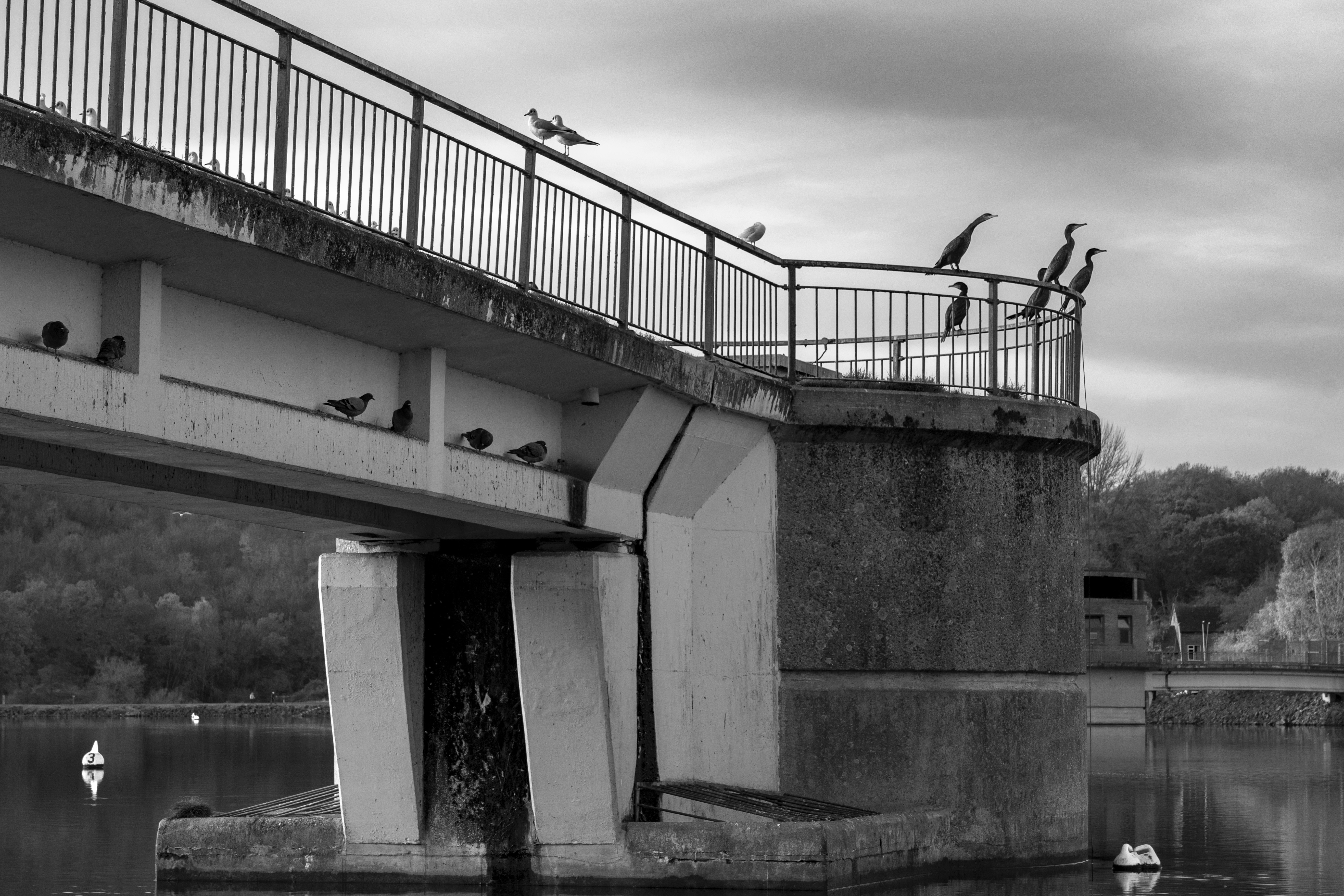
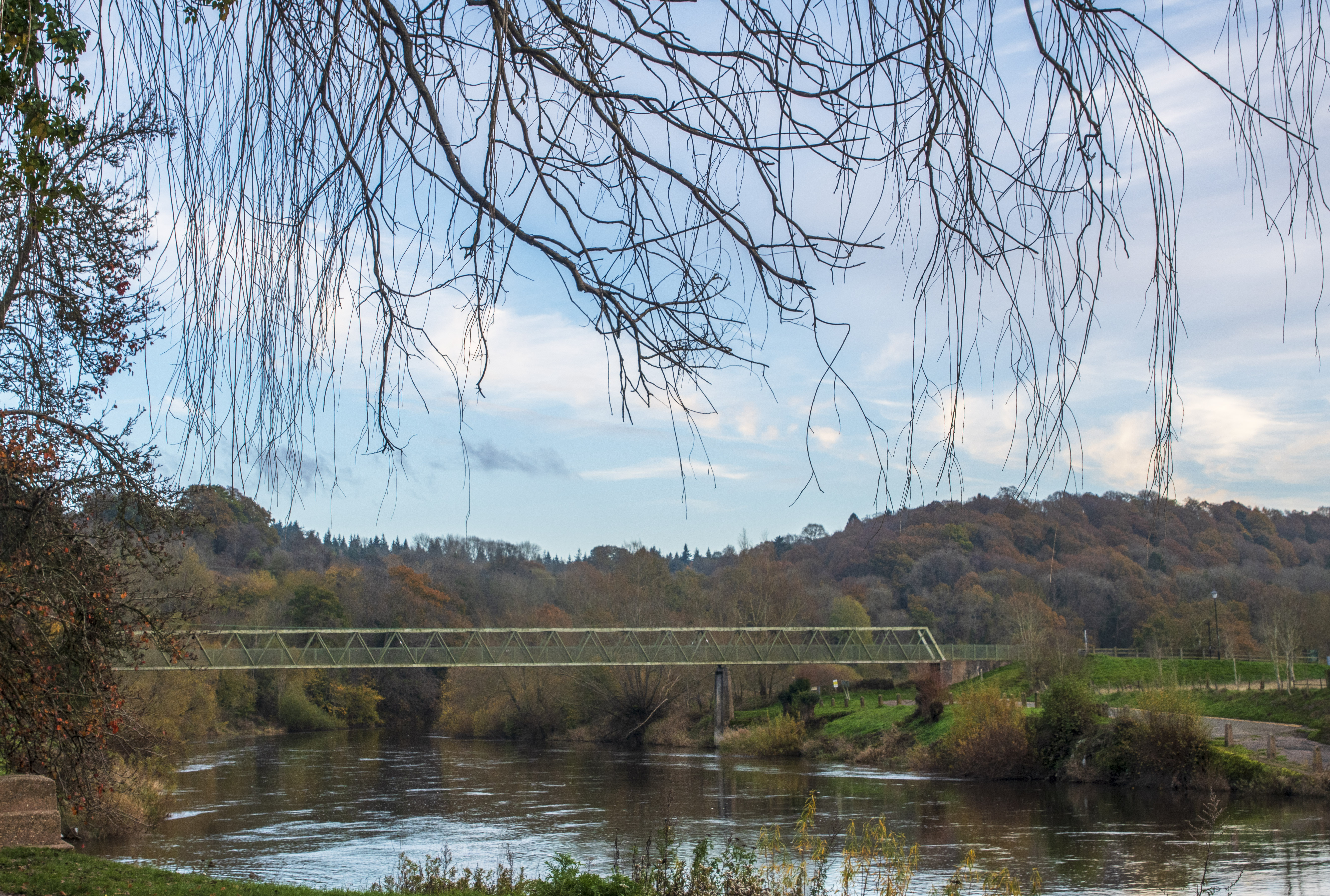
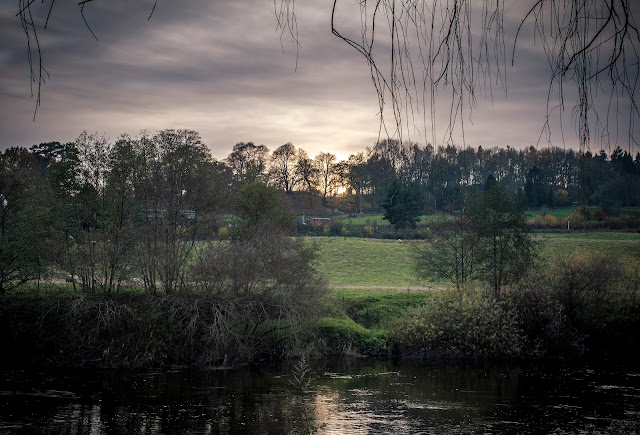
Rather than following the steady flow of a river (swollen River Teme in Ludlow pictured above), the weeks seem to be flying by faster than the speed of light. It really feels like one moment we were sweltering in summer's soaring temperature highs and in the blink of an eye, we're just weeks away from Christmas!
This is the time of year when people lose their minds and money to the relentless pressure to go big or go home; a conveyor belt of incentives to spend their way into creating perfect, envy-inducing, Instagram-worthy lives for the festive season.
My only nod to Black Friday, was an Instagram feature by ethical clothes company Kharibu, demonstrating that there are affordable, thoughtfully produced, long wearing and stylish clothes available. Unfortunately, they managed to crop the top of my head from the image, but I'll let them off.
So, on Black Friday, I elected to spend time with my Mom and we headed to one of her favourite scenic Shropshire market towns, Ludlow. For Mom, it was more about the scenic drive than the shopping and so we drove up to the dizzy heights of Titterstone Clee (my last visit was in dense fog - read it and see the photos here: Winter Peach Photography: The Beginning of the End?). This time, we were able to enjoy our sandwiches and the far-reaching views under bleached blue skies, although the wind on the Shropshire hills had a distinctly wintry bite.
Clee Hill is one of only a few hills and mountains noted on the Hereford Mappa Mundi, a 13th century map of the world displayed at Hereford Cathedral.
Here's a glimpse of the radar station at the summit, as viewed through the wing mirror from the cosy car interior.
The station was top secret when first erected in 1941 during some of the darkest days of the war. Referred to as RAF Clee Hill, it housed between 40-50 personnel. Initially the radar and wireless crew lived in huts within the station which made for cold living conditions in winter, with the occupants frequently snowed in with only each other and the surrounding sheep for company. It ceased to be residential in September 1956 when crew were allowed to board in Ludlow. The station, latterly commended by a Flight Lieutenant, disbanded and closed in September 1957, but was reactivated in 1964 under the oversight of the Civil Aviation Authority.
The original station has long disappeared, its more modern replacement today forming part of a national radar network and playing a key role in providing weather information - specifically cloud precipitation - for the Met Office. No mobile phone signal however!
On the winding route down (mercifully there are a number of passing places), we passed Clee Common and this quaint terrace of Victorian cottages. What a spot!
In Ludlow, with a Balls to Black Friday attitude, we window shopped the pricey shops and instead visited the town's market and charity shops. Not wanting to repeat myself by photographing familiar scenes (I've blogged about Ludlow in the past), I picked out a couple of interesting details here and there, like this decorated wall in Market Street...
...and this window, reflecting the opposing stone wall, bathed in sunlight.
Our last charity shop stop was the Sue Ryder shop (hospice and neurological care charity), tucked away in a side street - and what a find! Far from being musty and uninspiring as many often are at first glance, this was the swinging 60s, Bazaar Boutique of charity shops, managed by the gorgeous Allie (unbelievably a sexagenarian!)

The music was fantastic and Allie had, without first seeking permission, transformed the shop into a funky, meticulously curated shopping haven, the cutest donations being showcased to perfection utilising retro displays and bold wallpaper backdrops. By the time the powers that be had discovered her handywork, word had got out and so she was given free rein to do whatever the hell she likes!
I made a couple of purchases....this leopard print beanie...
...a perfect fit replacement wide brimmed hat from M&S in the exact colour of one I was gifted a few years ago, which unfortunately was too big.
...and three framed retro folk art pictures for a tenner!
I also found inspiration in The Index Bindery in Ludlow, originally set up during the first lockdown to showcase the owner's binding skills, but now extended to repairs, rebinding, notebooks and the most marvellous paper marbling (an effective method of aqueous surface design producing patters similar to smooth marble or other kinds of stone).
A little shelving unit in the centre of the shop's rather small interior space housed numerous paper offcuts, on sale for 50p each. I grabbed a handful of offcuts I was drawn to and handed over my £6.00, leaving with the seed of an idea to transform a low table we rescued from the scrapman after a neighbour left it out during a house renovation at the beginning of the pandemic.
This table has undergone more than one makeover. Initially, mired in the gloom of a global pandemic, we painted it red to lift our spirits. After a while we tired of the red paint and having not lavished attention on the finish, noticed that it was chipping. Given that the table had cost us nothing, one evening, Gareth decided to experiment with a new painting technique on the surface of the table with the colours we had to hand. The result was an abomination of mismatched colours. However, for some inexplicable reason, we have lived with it (probably because it's covered in books and other papers and reading material most of the time).
This time, we painted it black, carefully cut out the marbled paper into varying sized "tiles" and played jigsaw puzzle with them until we were happy. To finish, we added lashings of varnish, a touch of gold acrylic and....it lives to fight another day.
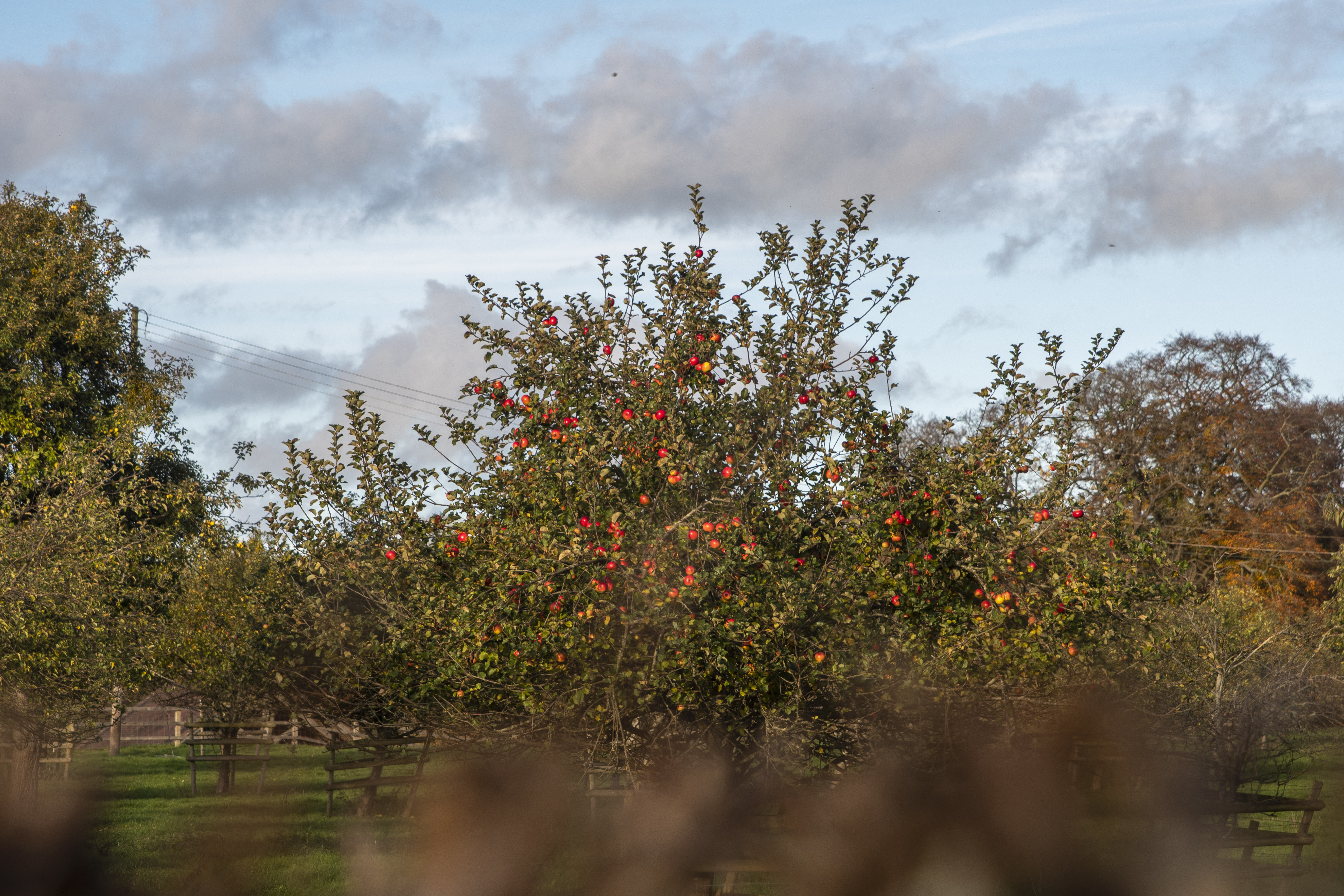
As for our regular walks, this week's favourite, like the creatures of habit we are, was a walk along the River Severn at Arley last weekend. It's the perfect length for an afternoon walk at around 4.5 miles, circular and offers variety in the form of apple orchards....
...wooded hills for cardio and thighs...
...light reflecting water and wildlife at the reservoir....
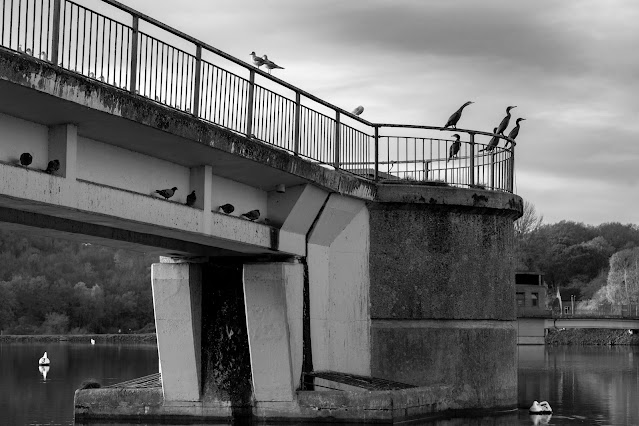 |
| Cormorants and feathered friends |
...the swollen, fast flowing River Severn...
...stunning valley scenery
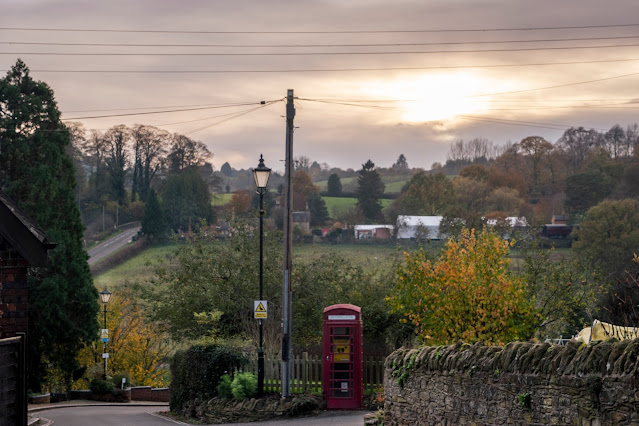
....and a quaint, quintessentially English hamlet.
As if we weren't feeling grounded enough after all that, I also dug out my macro equipment and did a spot of fungi hunting, the sodden wood surrounding the garden's wildlife pond being the perfect environment for it.
So, back to the floor that I love, there were the usual wood ear culprits....
....but these waxy little pearls baffled me. Thank goodness for Google! Behold the aptly named Crystal Brain fungus - first described by Karl Friedrich Wilhelm Wallroth in 1833, who found it growing on hawthorn in Germany.
Retreating back inside to relative warmth, I'm currently reading two books, something I'm prone to do, until I can decide which one is going to grab my full attention. I'm dividing my limited reading time between an adult romp from renowned children's author Roald Dahl and The Essex Serpent, a Victorian tale with shades of Bram Stoker and Charles Dickens.
I've also added to our small-but-perfectly-formed vinyl collection with two of my all-time favourites, sourced by a vinyl collector friend. The musos amongst you might have spotted the Fleetwood Mac lyrical reference in this blog's title.
How are you handling the changing seasons? What, outside the usual drudgery, is keeping you occupied?

 Posts
Posts